The best air purifiers for bedrooms
A bedroom is a good place for an air purifier, because it's the one room where you spend eight hours at a stretch with the door closed. It's also the room where a noisy one will be switched off by the second night. So this guide looks at two things together: whether each purifier is big enough for your room, and how quiet it is on the low speed you'll sleep beside. If the numbers on the box mean little to you yet, don't worry. There's only one bit of maths involved, which is multiplying your floor area by 12, and we'll walk through it together.
Published November 2026
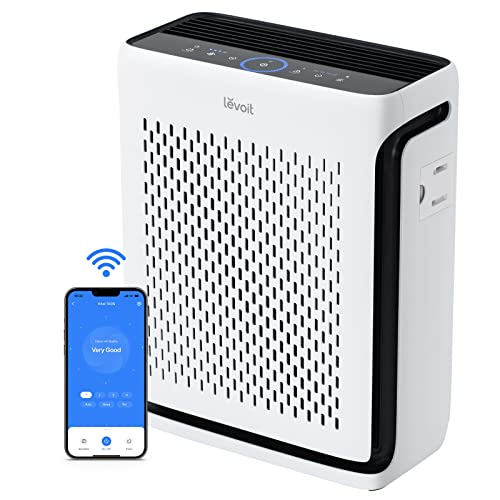
LevoitCore 300
- 187 m³ of clean air an hour, enough for 15 m²
- Sleep mode, a timer and a display that turns off
- Filter rated for 6 months, the shortest of the three
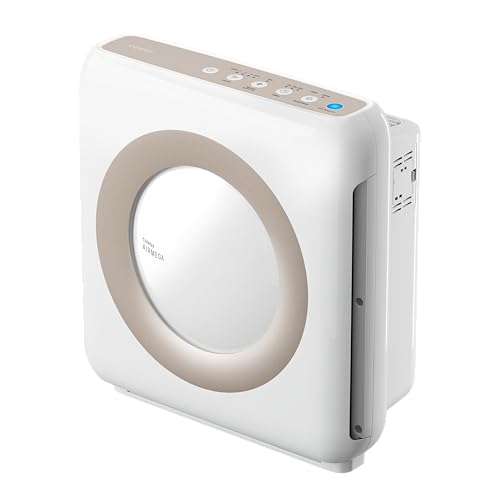
CowayAirmega 50
- 18.4 dB on its lowest speed, and it draws 14 W
- Every light on it can be switched off
- Too small for any room over 10 m²
PhilipsPureProtect Quiet 2200 Series AC2220/10
- 13 dB on its lowest speed, the quietest we list
- Filter rated for 36 months, the longest here
- Costs one price band more than the other two
Which of the three should you buy?
Find the line that sounds like your home. It tells you which air purifier to pick.
 Buy theLevoit Core 300
if any of these is you:
- Your bedroom is between 11 and 15 m²
 Buy theCoway Airmega 50
if any of these is you:
- Your bedroom is 10 m² or smaller
- Your room is small and you'd like the fan to set its own speed
 Buy thePhilips PureProtect Quiet 2200 Series AC2220/10
if any of these is you:
- The faintest hum keeps you awake
- You'd rather not change a filter for years
What we look for in a bedroom air purifier
Enough clean air for the room
There's one bit of maths worth learning. Multiply your floor area by 12, and you have the clean air the room needs each hour. So a 10 m² bedroom needs 120 m³ an hour, and a 15 m² one needs 180.
Read the explainer →Noise on the lowest speed
The lowest speed is the one you'll hear at 2 am, so that's the figure we compare. Across the purifiers we list it runs from 13 dB up to 35 dB, which is a bigger gap than it sounds.
Lights you can turn off
A bright display can be as bothersome as a noisy fan once the room is dark. We look for one that switches off or dims, and a night light is a nice extra in a child's room.
How long the filter lasts
Every purifier needs a new filter in the end. Our three picks are rated for 6, 8 and 36 months, so it's worth knowing which you're signing up for.
Read the explainer →The three side by side
| Best overallLevoitCore 300 | Best for small bedroomsCowayAirmega 50 | Best for light sleepersPhilipsPureProtect Quiet 2200 Series AC2220/10 | |
|---|---|---|---|
| Price band | Under $150 | Under $150 | $150 to $300 |
| Clean air an hour | 187 m³ | 120 m³ | 420 m³ |
| Room it cleans 5 times an hour | 15 m² | 10 m² | 35 m² |
| Noise | 24 to 48 dB | 18.4 to 44.1 dB | 13 to 45 dB |
| Main filter | True HEPA | HEPA | HEPA NanoProtect |
| Carbon layer for smells | Yes | Not stated | Yes |
| Filter lasts | 6 months | 8 months | 36 months |
| View price | View price | View price |
What each costs to run
Set the two boxes to match your home and the costs below update.
The electricity figure assumes full power for every hour, so it is the most you would pay. A purifier on a low fan speed uses less. Filter costs use the price of the replacement filter when we checked in November 2026, so treat them as a guide.
Our three picks, reviewed
If your bedroom is somewhere between 11 and 15 m², this is the one we’d start with, and the reason comes down to a little arithmetic. Multiply your floor area by 12 and you get the clean air the room needs each hour. For a 15 m² room that’s 15 × 12 = 180 m³, and the Core 300 delivers 187. So it’s just big enough for the largest room in this guide, and comfortable in anything smaller.
Nights are where a bedroom purifier is really judged. On its quietest setting the Core 300 runs at 24 dB, and it has a sleep mode on top of its three fan speeds. You can switch the display off so the room stays properly dark, and a timer will stop it after 2, 4, 6 or 8 hours if you’d rather it didn’t run until morning.
Behind the True HEPA filter there’s a layer of activated carbon. The HEPA filter catches particles such as dust and pollen, and the carbon is there for smells, so between them they cover most of what a bedroom needs.
There are two things worth knowing before you buy. The filter is rated for 6 months, which is the shortest of our three picks, so you’ll be replacing it twice a year. There’s also no phone app, which means every setting is changed on the machine itself.
If your room is 10 m² or smaller, have a look at the Coway below, because it’s quieter and big enough. And if you’re someone who hears every little hum at night, the Philips is worth the extra money.
Small rooms are easy to get wrong, because it’s tempting to buy more machine than a nursery or a study needs. The Airmega 50 is built for exactly that size of room. It delivers 120.1 m³ of clean air an hour, and since 120 ÷ 12 = 10, a 10 m² room is where it does its best work.
That figure is also its limit, so please don’t stretch it. In a 14 m² bedroom it would filter the air about three and a half times an hour, which falls short of the five we look for.
Within its size, though, it’s a very easy machine to live with. It runs at 18.4 dB on its lowest speed, and a particle sensor lets it choose its own fan speed as the air changes, so you can leave it alone. The night light, the air quality light and the display can each be switched off, which matters more than you’d think once the room is dark.
It’s light on power too, drawing 14 W where the Levoit draws 33 W, and its filter is rated for 8 months. At 32 cm tall and 1.6 kg, it’s small enough to carry from the nursery to the study in one hand.
Some people can sleep through anything, and some people lie awake listening to the fridge. If you’re in the second group, this is the purifier for you. On its lowest speed it runs at 13 dB, which is the quietest figure of any purifier we list, and well under the Coway’s 18.4 dB and the Levoit’s 24 dB.
It’s a much bigger machine than a bedroom strictly needs, and that turns out to be helpful. It delivers 420 m³ of clean air an hour, and 420 ÷ 12 = 35, so it’s big enough for a 35 m² room. The 13 dB belongs to its slowest speed and the 420 m³ to its fastest, so you never get both at once. But a purifier with this much air in reserve can run slowly and quietly, and still move a fair amount.
The filter is the other reason to choose it. It’s rated for 36 months, against 8 for the Coway and 6 for the Levoit, and an indicator tells you when the time comes. Inside are a pre-filter, a HEPA NanoProtect filter and a layer of active carbon. Like the Coway, it has a particle sensor and an auto mode, so it can set its own fan speed, and there’s a phone app if you’d like to check on it from another room.
All of that costs more. It sits in our $150 to $300 band, one above the other two, so if your bedroom is small and you sleep soundly, you may be just as happy with one of the cheaper two.
Common questions
How much clean air does my bedroom need? Multiply the floor area in square metres by 12. A 12 m² room, for example, needs 12 × 12 = 144 m³ an hour. That gives five air changes an hour under a 2.4 m ceiling, and our explainer on what CADR means shows where the 12 comes from if you’re curious.
Is a bigger purifier wasted in a small bedroom? Not at all, as long as it’s quiet on low and you have the floor space. A bigger purifier can run on a slow, quiet speed and still move plenty of air, whereas a small one has to run fast to keep up, and fast is when it’s loudest.
Will a purifier fix a damp, musty bedroom? It won’t, unfortunately. A purifier takes particles out of the air and leaves the water where it is. The US EPA notes that air cleaners will not resolve a mould and moisture problem. Damp is a job for a dehumidifier, and air purifier or dehumidifier explains the difference.
Our verdict
If you take one thing from this guide, let it be to start with the size of the room. A purifier that's too small can't make up for it by being quiet, so it's worth working out the clean air your bedroom needs before you look at anything else.
Once the size is right, turn to the noise on the lowest speed, because that's the speed you'll be sleeping beside. Lights that switch off and a filter that lasts are both nice to have, and they're the things to weigh up last, when you're choosing between two purifiers that are both big enough and quiet enough.