Bushfire smoke: the best air purifiers for big rooms
Bushfire smoke has a way of getting indoors even when every window is shut. We treat it as a job for the biggest room in the house, which for most of us is the living room, because that's where everyone can gather while the smoke is about. A purifier for that room has to move a lot of air at full speed, and it needs a layer of carbon as well, because smoke is a smell as much as it is a haze. So this guide comes down to two questions, which are how much clean air your room calls for and which of three purifiers can supply it, and the first is answered by a single multiplication.
Published November 2026
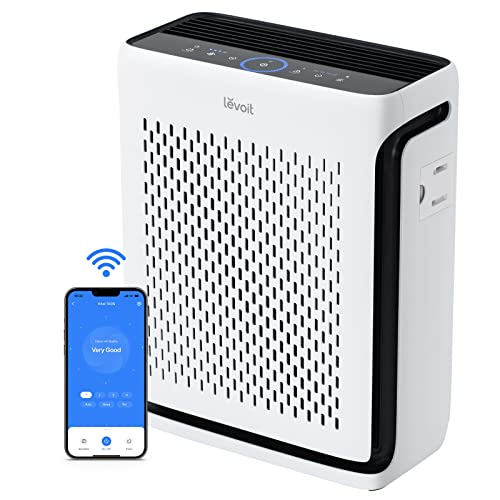
LevoitCore 600S
- 711 m³ of clean air an hour, enough for 59 m²
- A particle sensor sets the fan speed for you
- Filter rated for 6 months, half the Coway's 12
IonmaxIonmax+ Aire X ION1000PRO
- 1,000 m³ of clean air an hour, the most we list
- HEPA H13 filter with a carbon layer for smells
- Weighs 15.5 kg and sits in our top price band
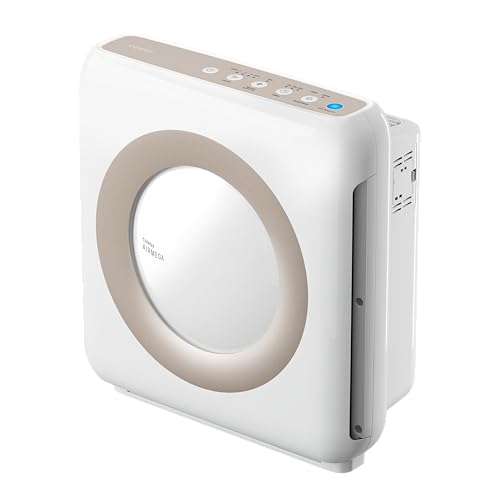
CowayAirmega Mighty AP-1512HH
- 421 m³ of clean air an hour for $150 to $300
- Main filter rated for 12 months, the longest here
- Too small for any room over 35 m²
Which of the three should you buy?
Find the line that sounds like your home. It tells you which air purifier to pick.
 Buy theLevoit Core 600S
if any of these is you:
- Your living room is between 36 and 59 m²
- You want the most clean air below our top price band
 Buy theIonmax Ionmax+ Aire X ION1000PRO
if any of these is you:
- You have an open-plan floor of 60 m² or more
 Buy theCoway Airmega Mighty AP-1512HH
if any of these is you:
- The room is 35 m² or smaller
- You want smoke cover for the least money
What we look for in a purifier for bushfire smoke
A high clean-air rate
The clean-air rate tells you how much smoke a purifier can take out of a room each hour, so it's the first number to check. To find what your room needs, multiply the floor area by 12. For a 40 m² living area that's 40 × 12 = 480 m³ an hour.
Read the explainer →A filter for fine particles
The haze in smoke is made of fine particles, and a HEPA filter is the layer that traps them. The grade printed on the label tells you less than the clean-air rate does, so there's no need to puzzle over it for long.
Read the explainer →A carbon layer
Smoke is made of gases as well as particles, and a particle filter lets the gases straight through. Activated carbon is the layer that takes up the smell, which is why we like to see it named on the spec sheet.
Full-speed running
On a smoky day the purifier will be on its top speed for hours, which makes the full-speed figure the fair one to compare. Quiet running is still nice to have, but it counts for much less here than it would beside a bed.
The three side by side
| Best overallLevoitCore 600S | Best for big roomsIonmaxIonmax+ Aire X ION1000PRO | Best budgetCowayAirmega Mighty AP-1512HH | |
|---|---|---|---|
| Price band | $300 to $600 | Over $600 | $150 to $300 |
| Clean air an hour | 711 m³ | 1,000 m³ | 421 m³ |
| Room it cleans 5 times an hour | 59 m² | 83 m² | 35 m² |
| Main filter | True HEPA | HEPA H13 | GreenHEPA |
| Carbon layer for smells | Yes | Yes | Yes |
| Particle sensor | Yes | Yes | Yes |
| Filter lasts | 6 months | 6 months | 12 months |
| View price | View price | View price |
What each costs to run
Set the two boxes to match your home and the costs below update.
The electricity figure assumes full power for every hour, so it is the most you would pay. A purifier on a low fan speed uses less. Filter costs use the price of the replacement filter when we checked in November 2026, so treat them as a guide.
Our three picks, reviewed
The Core 600S leads this guide because it has enough air for a large living room without stepping into our top price band. It delivers up to 711 m³ of clean air an hour, and since 711 ÷ 12 comes to just over 59, a 59 m² room is the largest it can clean five times an hour. Only the two Ionmax purifiers in our list deliver more than that, and both of them sit a price band higher.
Smoke rarely stays the same all day. It can thin out and thicken again through the day, and that’s where a sensor is a real help. A laser particle sensor reads the air in the room and the auto mode sets the fan speed from what it finds, so the purifier speeds up as the smoke drifts in, whether or not you’ve noticed it yet. There’s a phone app as well, which lets you check on it from another room and set up your own schedules.
Inside, the air passes through a pre-filter, a True HEPA filter and a layer of activated carbon, which means the particles and the smell are both looked after. At 6.2 kg, with a handle at each end, it can also be carried to a bedroom at night if that’s where you’d like the clean air to be.
The filter is rated for 6 months, which is half the 12 months of the Coway further down, so it’s wise to plan on two new filters a year. And if your room is 35 m² or smaller, you’d be paying for air you won’t use, because the Coway covers a room that size from one price band lower.
Some homes are really one big space, with the kitchen, the dining table and the couch all sharing a ceiling, and a floor like that asks for a great deal of air. An 80 m² floor, for instance, needs 80 × 12 = 960 m³ an hour. The Aire X delivers 1,000 m³, which is the most of any purifier we list, and that’s enough for a floor of up to 83 m².
All that air takes a big fan in a big cabinet, and you’ll notice it first in the weight. At 15.5 kg this is the heaviest purifier we list, so it’s worth choosing its spot with care, because it will most likely stay there.
You’ll notice it in the sound as well, since it’s the loudest of our three picks. Its slowest speed runs at 35 dB, where the Levoit’s runs at 26 dB, and at the top it reaches 66 dB. In a large living area with people moving about, that’s far easier to live with than it would be beside a bed, which is one more reason to keep it for the big room it was built for.
The filter has more stages than most. Air goes through a pre-filter, an antibacterial HEPA H13 filter and activated carbon, and after those come a TiO2 filter, a UV-C light and an ioniser. For smoke, it’s the first three that do the work we care about, and they’re rated for 6 months.
Like the Levoit, it has a particle sensor and an auto mode, so it will raise its own fan speed when smoke arrives, and there’s a phone app for checking on it. It sits in our top price band, over $600, and that only makes sense when the room is bigger than 59 m². Up to that size, the Core 600S has the room covered for one band less.
You don’t have to reach our $300 to $600 band to be ready for a smoky week, and we think that’s worth saying plainly, because the bigger machines can make it seem otherwise. The Airmega Mighty sits in the $150 to $300 band and delivers 421 m³ of clean air an hour. That’s almost exactly what a 35 m² room needs, since 35 × 12 = 420, so 35 m² is the largest room we’d put it in. A fair-sized lounge or a large bedroom fits inside that.
That 35 m² is a firm limit, though. In a bigger room it would be working at full speed and still not turning the air over five times an hour, and in that case the Core 600S is the one to look at instead.
For a room within its size, there’s a lot here for the money. A washable pre-filter comes first, then a deodorisation filter with carbon for the smell, then a GreenHEPA filter for the fine particles. The main filter is rated for 12 months, twice as long as either of the other picks, while the deodorisation filter is rated for 6. A particle sensor runs the auto mode, and a light in three colours shows you how the air is doing at a glance.
There’s also an eco mode that stops the fan once the air has been clean for 30 minutes. That’s a nice saving in an ordinary week, although while smoke is about you may prefer to keep the fan running. At 5.9 kg, against the Ionmax’s 15.5 kg, it’s also the easiest of the three to move to wherever the family has settled.
Common questions
Does a purifier get rid of the smoke smell? It can, as long as it has a carbon layer, because that’s the part that deals with smell. The particle filter traps the fine particles, but the smell comes from gases, and those pass straight through it. By the EPA’s guide, a purifier with a high clean-air rate and an activated carbon filter can filter both.
What speed should it run at on a smoky day? As high as you can comfortably live with, and for as long as you can. The EPA’s smoke advice is to run a portable air cleaner as often as possible on the highest fan speed. It’s best placed in the room where people spend the most time, and our explainer on what CADR means shows why the speed makes such a difference.
Is one purifier enough for the whole house? One purifier looks after one room, provided it’s the right size for that room. So while the smoke is about, the simplest plan is to choose that room, follow the EPA’s advice to keep windows and doors closed, and let everyone gather there. If you’d like to see which purifiers are big enough for yours, the Room Sizer will show you.
Our verdict
Smoke is a job for the clean-air rate, so the first step is to multiply your floor area by 12 and buy at least that much air. It's better to have a little in hand than to fall short, because a purifier that's too small will run flat out on a bad day and still fall behind.
Once the size is right, look for a carbon layer, since that's the part that deals with the smell. A particle sensor is well worth having too, because it speeds the fan up when smoke drifts in, even if you aren't watching.