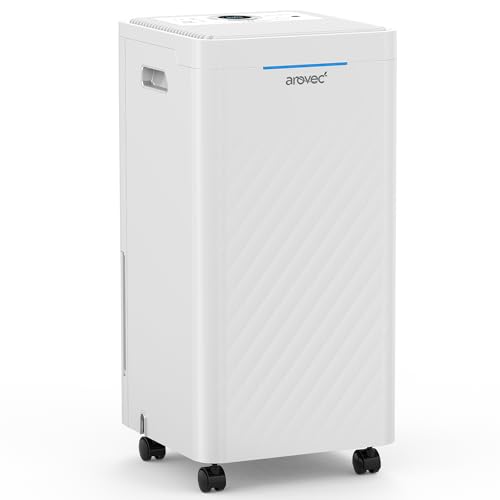
Best desiccant dehumidifiers for cold rooms
Some rooms just stay cold. An unheated back bedroom, a garage or a wardrobe built against an outside wall can be chilly for most of a southern winter, and that happens to be exactly where the usual kind of dehumidifier, the compressor kind, starts to lose its drying power. A desiccant dehumidifier works a different way and is built for the cold, and all three of our picks work in rooms from 1°C right up to 40°C. Since they share that, the choice between them rests on plainer things, which are the size of your room, the tank, the power each one draws and how easily you can carry it.
Published November 2026
AusclimateCool-Seasons Premium 10L (AU-1910DD)
- Rated at 10 litres a day at 20°C and 60% humidity
- Sized for rooms up to 50 m², the largest here
- Its noise figure, 49 dB, is the highest here
IonmaxVienne ION630
- A 4.2-litre tank, the biggest of these three
- Laundry mode and a timer of up to 12 hours
- Draws up to 740 W, the most of these three
IonmaxION610
- Weighs 5.1 kg, the lightest of these three
- Drops to 34 dB on its low fan setting
- Rated at 6 litres a day, the least of the three
Which of the three should you buy?
Find the line that sounds like your home. It tells you which dehumidifier to pick.
 Buy theAusclimate Cool-Seasons Premium 10L (AU-1910DD)
if any of these is you:
- You're drying a big cold room, up to 50 m²
- You want a 10-litre machine that's lighter to carry
 Buy theIonmax Vienne ION630
if any of these is you:
- You'll dry washing with it and can't run a hose
 Buy theIonmax ION610
if any of these is you:
- It's for a small bedroom or a walk-in wardrobe
- You'll carry it from room to room
What we look for in a desiccant dehumidifier
The coldest room it works in
This is the whole reason to buy a desiccant. Every desiccant machine we list works from 1°C up to 40°C, whereas the compressor machines that give a range stop at 2°C or 5°C, and they lose drying power as a room cools.
Read the explainer →Litres a day, tested at 20°C
Every desiccant machine we list was tested at 20°C and 60% humidity, so you can compare their litres a day with each other quite fairly. What you can't do is rank them against a compressor machine that was tested in a hotter, wetter room.
Read the explainer →Power draw
A desiccant machine has a heater inside, so it draws more power than a compressor machine of a similar size. On their top settings our three picks draw between 460 and 740 W, and it's better to know that before you buy.
Tank and hose
The tanks on our three picks hold from 1.8 to 4.2 litres. All three can drain through a hose instead, and that's the better arrangement for a room that nobody visits every day.
Weight
You may well want one machine to serve a bedroom overnight and the laundry by day. These three weigh between 5.1 and 7.5 kg and each has a carry handle, so that's easy enough to do.
The three side by side
| Best overallAusclimateCool-Seasons Premium 10L (AU-1910DD) | Best for drying washingIonmaxVienne ION630 | Best for small roomsIonmaxION610 | |
|---|---|---|---|
| Price band | $300 to $600 | $300 to $600 | $300 to $600 |
| Water a day | 10 litres | 10 litres | 6 litres |
| Tested at | 20°C and 60% humidity | 20°C and 60% humidity | 20°C and 60% humidity |
| Advertised room size | 50 m² | 42 m² | 25 m² |
| Tank | 3 litres | 4.2 litres | 1.8 litres |
| Noise | 49 dB at full speed | 35 to 46 dB | 34 to 45 dB |
| Power draw | 730 W | 740 W | 460 W |
| View price | View price | View price |
What each costs to run
Set the two boxes to match your home and the costs below update.
The electricity figure assumes full power for every hour, so it is the most you would pay. A dehumidifier switches off once the room reaches the humidity you set, so most homes pay less.
Our three picks, reviewed
Cold rooms are often big ones, like a garage, a rumpus room under the house or the whole downstairs of a holiday place, and that’s where the Ausclimate earns its spot at the top. It’s sized for rooms up to 50 m², against 42 m² for the Vienne and 25 m² for the ION610, so it covers the biggest room of our three picks.
On drying power it’s level with the Vienne. Both are rated at 10 litres a day at 20°C and 60% humidity, and the ION610 is rated at 6 in the same test room. Because all three were measured the same way, this is one of the few times you can simply line the litres up and compare them.
It’s also well set up to be left alone for a while. A 1.2 m drain hose comes in the box, so the 3-litre tank needn’t be emptied by hand, and the machine restarts by itself after a power cut, which is a comfort when it’s running somewhere you only visit on weekends. There’s a laundry mode and a 12-hour timer too, along with louvres that swing to spread the dry air around the room.
Where we’d be careful is noise. It has one published figure, 49 dB, and that’s higher than either Ionmax reaches even on its top setting. It draws 730 W, close to the Vienne’s top figure, and weighs 6.8 kg. That makes it a machine for the big cold spaces it was sized for, more than for a room you sleep in.
Wet washing is a slightly different job from keeping a room dry, because a lot of water arrives all at once. That’s when the size of the tank starts to matter, and the Vienne’s holds 4.2 litres, which is the biggest of our three picks and 1.2 litres more than the Ausclimate’s. If the rack is in a room with no drain nearby, a bigger tank simply means fewer trips to the sink. When there is a drain, a 1 m hose comes in the box.
In drying power it matches the Ausclimate exactly, at 10 litres a day at 20°C and 60% humidity. It has a laundry mode and a timer that runs for up to 12 hours, and like the other two picks it restarts by itself after a power cut. A display shows the room’s humidity, so you can see where things stand at a glance.
It’s the quieter of the two 10-litre machines as well. Its noise runs from 35 dB on low to 46 dB on high, so even at full speed it sits under the Ausclimate’s 49 dB. There’s a built-in ioniser, and you can switch that off if you’d rather not use it.
It sits second mostly because of room size, being sized for 42 m² where the Ausclimate is sized for 50 m². It’s also the heaviest of the three at 7.5 kg, though it has a carry handle, and it draws between 420 and 740 W depending on the setting, with the top figure being the most of the three. None of that need worry you if drying washing is the main job, since that’s the work it does best.
You don’t need a 10-litre machine for a small bedroom or a walk-in wardrobe, and there are good reasons to choose a smaller one. The ION610 is rated at 6 litres a day at 20°C and 60% humidity and sized for rooms up to 25 m², which covers those rooms comfortably, though it would be too little for a big living area.
Being small makes it the gentlest of the three on almost every other count. It draws between 280 and 460 W, so even its top figure is the lowest of the three. It weighs 5.1 kg and has a carry handle, which makes it the easiest to take from room to room. Its noise runs from 34 dB on low to 45 dB on high, and that’s why it’s the one we’d suggest for a room someone sleeps in.
Going small doesn’t mean going without, either. It has a laundry mode, it lets you set a humidity target, it restarts by itself after a power cut, and its timer runs for up to 8 hours.
The tank is the one place where small becomes a nuisance. It holds 1.8 litres, the least of the three, so you’ll be emptying it fairly often unless you run a hose. If you expect to dry washing with it regularly, the Vienne’s 4.2-litre tank and higher rating will serve you better.
Common questions
Do desiccant dehumidifiers cost more to run? They do draw more power, yes. A fair way to see it is to put two machines sized for the same 50 m² room side by side. The Ausclimate here, a desiccant, draws 730 W, while the Breville Smart Dry Plus Connect, a compressor machine, draws 320 W. So in a room that stays mild a compressor machine is the cheaper one to run, and a desiccant earns its extra power when the room is cold. Our compressor or desiccant explainer covers when each one makes sense.
Can I use a desiccant dehumidifier in summer? You can, because all three picks work in rooms up to 40°C. In a warm room, though, a compressor machine does the same job on less power, so a desiccant is the better buy only if the room is cold for part of the year.
Will one keep a wardrobe dry? It dries the room the wardrobe is in, so the thing to remember is to leave the wardrobe doors open while it runs. The Australian Building Codes Board’s handbook also advises leaving space for air to move around furniture and keeping large items off outside walls where you can.
Our verdict
A desiccant dehumidifier is the one to buy when the room is cold, because it keeps pulling water at temperatures where a compressor one slows down. It does cost more to run in exchange, so if your room stays mild all year, a compressor machine is the more sensible buy.
Once you've settled on a desiccant, match its size to the room and then look at the tank. A big tank or a hose to a drain matters most if it will be drying washing, and a lighter machine is easier to live with if you'll be carrying it from room to room.