The best dehumidifiers for bedrooms
A damp bedroom tends to show itself in small ways first, like water on the inside of the window in the morning or a wardrobe that smells a little musty. A dehumidifier can help with that, and a bedroom is a gentle job for one, because there's far less water to deal with than in a laundry full of wet washing. What makes it a different choice is that the machine sits a few metres from your pillow, so how loud it is matters a good deal, and so does how cold the room gets overnight. Once those two things are settled, the smaller details like the tank and the timer are easy to choose.
Published November 2026
BrevilleSmart Dry Connect LAD208
- Rated at 10 litres a day at 30°C and 80% humidity
- Phone app, timer and a humidity target you set
- Pulls less water in a cold, unheated bedroom
IonmaxION610
- Works in rooms from 1°C up to 40°C
- Drops to 34 dB on its low fan setting
- Draws up to 460 W, the most of these three
ArovecAroDry-P10
- One price band below the other two picks
- Night mode, and it restarts after a power cut
- Draws 220 W, a little more than the Breville
Which of the three should you buy?
Find the line that sounds like your home. It tells you which dehumidifier to pick.
 Buy theBreville Smart Dry Connect LAD208
if any of these is you:
- Your bedroom is heated, or stays mild overnight
- You want to set it from your phone before you get home
 Buy theIonmax ION610
if any of these is you:
- The room is unheated and cold on winter nights
- You'll carry it between bedrooms
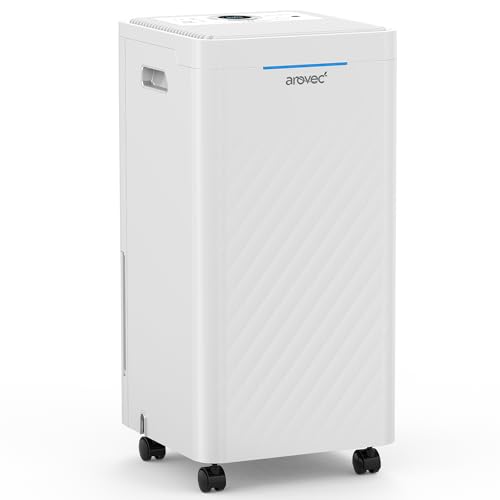 Buy theArovec AroDry-P10
if any of these is you:
- You want a compressor machine and want to spend less
What we look for in a bedroom dehumidifier
Noise at night
Noise is given in decibels, and a lower number is quieter. Some brands publish one figure and others give a low and a high, so it's worth checking which fan setting a number belongs to before you compare two machines.
A size that fits the room
A bedroom needs far less drying than a laundry with a full rack in it, so you don't need a big machine. Our three picks are sized for rooms of 25 to 30 m², which leaves most bedrooms plenty to spare.
Read the explainer →How cold the room gets
This is what decides the type of machine. A compressor dehumidifier loses drying power as the room cools, while a desiccant one is built for the cold, so a bedroom that stays unheated through a southern winter points to a desiccant.
Read the explainer →A humidity target
With a target set, the machine stops when the air is dry enough and starts again when the room turns damp, which means it doesn't have to run all night. All three picks let you set one.
Tank or hose
A small tank fills sooner, and that's fine if you don't mind emptying it. All three picks can also drain through a hose, which is handy when the machine can sit near a bathroom drain.
The three side by side
| Best overallBrevilleSmart Dry Connect LAD208 | Best for cold roomsIonmaxION610 | Best budgetArovecAroDry-P10 | |
|---|---|---|---|
| Price band | $300 to $600 | $300 to $600 | $150 to $300 |
| How it dries | Compressor | Desiccant | Compressor |
| Water a day | 10 litres | 6 litres | 10 litres |
| Tested at | 30°C and 80% humidity | 20°C and 60% humidity | 30°C and 80% humidity |
| Noise | 42 dB at full speed | 34 to 45 dB | 42 dB at full speed |
| Power draw | 200 W | 460 W | 220 W |
| Tank | 2.5 litres | 1.8 litres | 2.5 litres |
| View price | View price | View price |
What each costs to run
Set the two boxes to match your home and the costs below update.
The electricity figure assumes full power for every hour, so it is the most you would pay. A dehumidifier switches off once the room reaches the humidity you set, so most homes pay less.
Our three picks, reviewed
If your bedroom is heated, or stays mild overnight, a small compressor dehumidifier is the sensible place to begin. The Breville Smart Dry Connect is sized for rooms up to 30 m², so an ordinary bedroom is well within what it’s made to handle.
Its headline rating is 10 litres a day, and it helps to know where a number like that comes from. It was measured in a test room at 30°C and 80% humidity, which is a good deal warmer and wetter than a bedroom on most nights. Breville also gives a second rating of 5 litres a day at 27°C and 60% humidity, and since that gentler room is closer to real life, the 5 is the figure worth keeping in mind.
It’s the one of the three we could confirm a phone app for. Between the app and the timer, you can let it run through the day with the bedroom door shut and have it stop before you turn in, which is handy if you’d rather sleep in a silent room. That’s worth knowing because its one published noise figure is 42 dB. If you’d like a machine that can keep running beside you all night, the Ionmax below goes down to 34 dB on its low setting, which is 8 dB under the Breville’s figure.
Day to day it asks very little of you. It draws 200 W, the least of our three picks, and the 2.5-litre tank can be left alone altogether if you connect the 1 m drain hose that comes in the box. At 9.5 kg it isn’t light, but it has wheels and a handle for moving it between rooms.
Like every compressor machine, it pulls less water as a room gets colder, so it’s at its best in a bedroom that keeps a little warmth through the night.
Some bedrooms never really warm up in winter, particularly a spare room, a sleep-out or a room on the south side of an older house. That’s the room this machine is for. The ION610 is a desiccant dehumidifier, the kind that keeps working when a room is cold, and its range runs from 1°C up to 40°C.
Please don’t be put off by its rating looking smaller than the others. It’s rated at 6 litres a day, but that was measured at 20°C and 60% humidity, a cooler and drier test room than the 30°C and 80% humidity the two compressor machines were measured in. Warm, wet air gives up more water, so the hotter test room produces bigger figures, and that means the 6 can’t be set against their 10. Our litres a day explainer goes through why, if you’d like the fuller picture.
On its low setting it’s also the quietest of the three, and it’s the easy one to move. That low fan setting runs at 34 dB, rising to 45 dB on high, and at 5.1 kg with a carry handle it can go from one bedroom to the next without any effort. It restarts by itself after a power cut, and the timer can be set for up to 8 hours, so it can see you off to sleep and then switch itself off.
Its 1.8-litre tank is the smallest of the three, which means emptying it more often unless you run a hose to a drain. And all of this is paid for in electricity. A desiccant machine has a heater inside, and the ION610 draws between 280 and 460 W depending on the setting, so at the top it’s using more than double the Breville’s 200 W. That’s a fair price for a room that’s truly cold, and more than you need to spend in one that’s heated.
Put this machine beside the Breville and it’s hard to tell the two apart on paper. They’re both compressor dehumidifiers with the same rating of 10 litres a day, measured in the same test room at 30°C and 80% humidity, and they share a tank size, a noise figure and a room size as well. What differs is the price band, because the AroDry-P10 sits in our $150 to $300 band, one below the other two picks.
So what would you be going without? We couldn’t confirm a phone app for the Arovec, so if setting the machine from your phone matters to you, the Breville is the surer choice. It also draws 220 W, which is 20 W more than the Breville, though that’s a small gap.
In return it has a few things of its own. There’s a night mode and a display that shows the room’s humidity as a number, and it restarts by itself after a power cut. It also carries an H13 HEPA filter with a layer of activated carbon, and it can run as an air purifier with the drying switched off. Those are two different jobs, mind you, and air purifier or dehumidifier will help you work out which one your room needs.
Being a compressor machine like the Breville, it belongs in the same sort of bedroom, one that’s heated or stays mild through the night.
Common questions
What humidity should I set for a bedroom? Around 50% is a good place to start. The US Environmental Protection Agency advises keeping indoor humidity below 60%, and ideally between 30% and 50% humidity, so a target of 50% sits inside that range. All three picks let you set a target, and then they look after it for you.
Will a dehumidifier get rid of mould? It lowers the humidity that mould needs, which helps, but it won’t remove mould that has already grown. Victoria’s Better Health Channel says the way to control indoor mould is to control the source of moisture, so it’s worth looking for the leak or the damp wall first. And if you’re worried about how mould is affecting your health, please see a doctor.
Do I need the drain hose in a bedroom? Only if there’s a drain close by. The tanks on these three hold between 1.8 and 2.5 litres, so you can simply empty the tank into the basin when it fills. The hose becomes worth setting up when the machine has to run for days while you’re away.
Our verdict
Start with how cold the bedroom gets, because that decides the type of machine before anything else does. A compressor dehumidifier works well in a room that is heated or stays mild, and a desiccant one is made for a room that is cold through winter.
After that, think about noise and timing together. You may well prefer to run it in the evening and sleep in a quiet room, and if so a timer or an app will matter more to you than a big tank. If you'd like it running beside you all night, look at the noise figure for the lowest fan setting, since that's the one you'll be sleeping next to.

