How do you stop condensation on windows?
If you've pulled back the curtains on a cold morning and found the bedroom window running with water, you may have wondered whether the window was leaking. It isn't. That water came out of the air in the room overnight, and it's a sign that the room is damper than it should be. The first things to try cost very little, so this page takes them in order, and then explains when wet windows are a reason to take the damp more seriously.
Published November 2026
Why water forms on cold glass
Air always carries some water as vapour, and warm air can carry more of it than cold air can. So when air cools, it eventually reaches a point where it can’t hold all its vapour any longer, and the extra turns to liquid. The Australian Building Codes Board’s condensation handbook calls that point the dew point, the temperature to which air must be cooled to produce condensation.
Windows show it first because the glass and frames are usually the coldest surfaces in a room. Room air touches the cold glass, drops below its dew point, and leaves its water on the pane. The damper the air is, the higher its dew point, which is why a damp room fogs its windows on a milder night than a dry room does.
Double glazing helps, since the inside pane stays warmer. It can hide the problem a little too, though, because condensation forms less readily on double glazing while the room behind it can still be damper than you’d want.
Most of the water comes from the people in the house
Nobody has to do anything unusual to make a room damp. The handbook’s figures put a family of four at about 5.5 kg of water vapour a day just from the people in it, and cooking, showers and washing add more. A load of washing dried inside, with the damp air not vented outdoors, is put at about 5 kg of water.
That also explains why the bedroom is so often the worst room. With the door shut overnight it collects the moisture from everyone sleeping in it, so by morning its window can be the wettest in the house.
Three things that help, cheapest first
These work best together, and the first two cost little or nothing, so they’re the place to begin.
Let the damp air out. Victoria’s Better Health Channel calls opening a door or window the cheapest and easiest way to lower moisture and humidity. Use the exhaust fans in the bathroom and kitchen, and vent a clothes dryer to the outside. In the cooler months, the afternoon is a good time to open windows, because that’s when the air outside is at its warmest.
Keep the room evenly warm. Condensation needs cold glass and air close to its dew point, and warmth works against both of those at once. What matters is the kind of heating: it lowers humidity most when it’s steady and spread through all the rooms, which is why a small heater aimed at one person does little for the room as a whole.
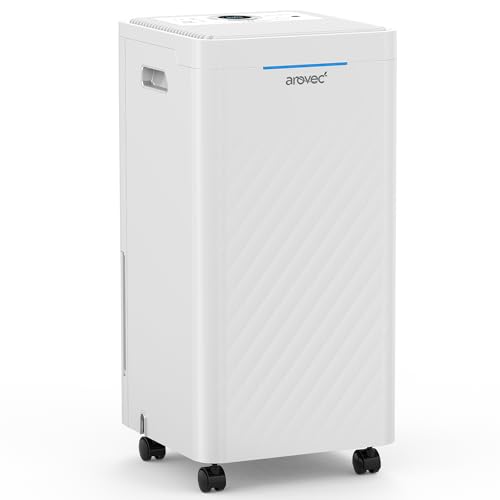
Dry the air with a dehumidifier. This is the step for a room where airing and heating haven’t been enough, because a dehumidifier takes the water out directly. The US Environmental Protection Agency lists using a dehumidifier when needed among its steps to lower humidity, and it advises keeping indoor humidity below 60%, and ideally between 30% and 50% humidity.
Whichever of these you do, please wipe the glass and the sill dry in the morning as well. Wiping condensation up every time discourages mould, and it protects timber frames and sills.
A cold bedroom calls for a desiccant dehumidifier
If you do get to the third step, the temperature of the room decides which kind of machine to look at. If the bedroom with the wet windows is also a cold one, a desiccant dehumidifier is the kind made for it.
The Ionmax ION610 is a good example. It works in rooms from 1°C up to 40°C, and it lets you set a humidity target so it can stop once the room is dry enough. It’s rated at 6 litres a day at 20°C and 60% humidity, and on its low fan setting it drops to 34 dB, which matters in a room you sleep in.
In a room that’s heated or stays mild, a compressor machine does the same job on less power, so there’s no need to buy a desiccant for a warm house. Our compressor or desiccant explainer goes through the choice, and our guide to the best dehumidifiers for bedrooms has three machines sized for one.
When to treat wet windows as a mould risk
A light mist on the glass after a cold night is common. It deserves more attention when the water comes back most mornings, pools on the sill, or shows up on walls as well as windows.
Condensation on windows is an early warning of high humidity, the kind that can support dust mites and mould growth. The handbook puts the level that makes mould viable at about 70% humidity, and warns that unheated rooms can reach it. The EPA’s advice is to act quickly when you see condensation on windows, walls or pipes, by drying the surface and cutting the source of the moisture.
Mould likes the places where air doesn’t move, so those are the places to look: the corners of the window frame, behind curtains, and inside wardrobes on outside walls. Better Health Channel notes that mould in buildings can trigger a blocked nose, sneezing, coughing and wheezing, and can worsen asthma. If you’re worried about your health, please see a doctor.
A dehumidifier has its limits here, and it’s kinder to say so now than to let you find out later. It lowers the humidity in a room, but it doesn’t treat any illness, and it won’t fix a leaking roof, a broken gutter or rising damp. If the damp is coming from the building itself, that needs repairing first, and if you rent, it’s something to report to your landlord or agent.