Top dehumidifiers for drying washing indoors
When the weather won't let you use the line, the washing ends up on a rack inside, and all the water in those clothes has to go somewhere. In a closed room it goes into the air, and from there it settles on the windows and the walls. A dehumidifier with a laundry mode gives that water somewhere better to go, which is into a tank or down a hose. Choosing one is mostly a matter of three things: how much water the machine removes, where that water ends up, and how cold your laundry gets in winter.
Published November 2026
BrevilleSmart Dry Plus Connect LAD308
- Rated at 20 litres a day at 30°C and 80% humidity
- 3.5-litre tank, and a drain hose in the box
- At 13.5 kg it is the heaviest of these three
IonmaxVienne ION630
- Works in rooms from 1°C up to 40°C
- Its 4.2-litre tank is the biggest of the three
- Draws up to 740 W, over double the Breville
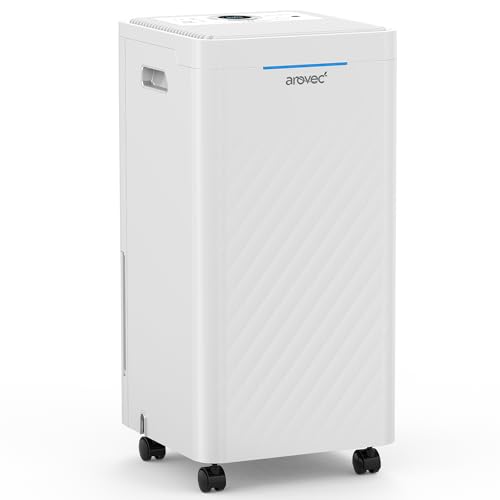
ArovecAroDry-P16
- Rated at 16 litres a day at 30°C and 80% humidity
- One price band below the other two picks
- Its 2.5-litre tank is the smallest of the three
Which of the three should you buy?
Find the line that sounds like your home. It tells you which dehumidifier to pick.
 Buy theBreville Smart Dry Plus Connect LAD308
if any of these is you:
- You dry a full rack most days in a laundry that stays mild
 Buy theIonmax Vienne ION630
if any of these is you:
- Your laundry or garage is unheated and cold in winter
- You can't run a hose, so the tank has to hold a lot
 Buy theArovec AroDry-P16
if any of these is you:
- You dry a load or two a week and want to spend less
What we look for in a dehumidifier for drying washing
A laundry mode
This is the setting made for wet washing, so it's the first thing to look for. All three picks have one, and so do most of the dehumidifiers we list, which means you won't be short of choice.
Litres a day
The more litres a day a machine is rated for, the more water it can pull from the air around the rack. The figure depends on the room it was tested in, though, so only compare two machines that were tested at the same temperature and humidity.
Read the explainer →Tank or hose
A rack of wet washing puts a lot of water into a room, so a bigger tank means fewer trips to the sink. If you can run a hose to a sink or a floor drain, there's no tank to empty at all.
How cold the laundry gets
If your laundry is out in the garage or under the house, think about winter before you choose. A compressor dehumidifier pulls less water as the temperature drops, whereas every desiccant machine we list works from 1°C.
Read the explainer →Weight and wheels
A dehumidifier in the laundry usually gets moved out of the way between loads, so it's worth checking the weight, and whether there are wheels, a handle or both.
The three side by side
| Best overallBrevilleSmart Dry Plus Connect LAD308 | Best for cold roomsIonmaxVienne ION630 | Best budgetArovecAroDry-P16 | |
|---|---|---|---|
| Price band | $300 to $600 | $300 to $600 | $150 to $300 |
| How it dries | Compressor | Desiccant | Compressor |
| Water a day | 20 litres | 10 litres | 16 litres |
| Tested at | 30°C and 80% humidity | 20°C and 60% humidity | 30°C and 80% humidity |
| Tank | 3.5 litres | 4.2 litres | 2.5 litres |
| Hose drain | Yes | Yes | Yes |
| Power draw | 320 W | 740 W | 210 W |
| View price | View price | View price |
What each costs to run
Set the two boxes to match your home and the costs below update.
The electricity figure assumes full power for every hour, so it is the most you would pay. A dehumidifier switches off once the room reaches the humidity you set, so most homes pay less.
Our three picks, reviewed
Drying a rack of washing is among the heaviest work a home dehumidifier gets asked to do, so this is the one guide where we’d look at the litres a day before anything else. The Breville Smart Dry Plus Connect is rated at 20 litres a day at 30°C and 80% humidity. The Arovec further down was tested in exactly the same room and is rated at 16, so those two figures can fairly be compared, and the Breville comes out 4 litres a day ahead.
The next thing to ask is where all that water goes. The tank holds 3.5 litres, a litre more than the Arovec’s, and there’s a 1 m drain hose in the box for when you’d rather send the water straight to a sink or a floor drain. Alongside the laundry mode and the timer there’s a phone app, so you can check on a load from another room.
All that capacity comes in a large machine. It’s sized for rooms up to 50 m², and at 13.5 kg it’s the heaviest of our three picks, although the wheels and handle mean you’ll be rolling it and not lifting it. Its 48 dB noise figure is the highest of the three as well, which matters little behind a closed laundry door and rather more if your drying rack lives in the lounge room.
For its size it isn’t hungry, though. It draws 320 W, which is less than half of what the Ionmax draws on its top setting. It’s a compressor machine, so the room it’s made for is a laundry that stays mild through the year.
Start with the tank on this one, because it’s the biggest of our three picks. It holds 4.2 litres, so if there’s no sink or drain within reach of a hose and the tank has to do all the work, the Vienne will go the longest before it needs emptying. A 1 m hose still comes in the box for the day you can use one.
It’s also the easiest of the three to move about, which counts for something when the machine comes out for each load and goes away again afterwards. It weighs 7.5 kg and has a carry handle, where the Breville weighs 13.5 kg. A timer runs for up to 12 hours, a display shows the room’s humidity, and if the power drops out the machine restarts by itself. Its noise runs from 35 dB on low to 46 dB on high.
The Vienne is a desiccant dehumidifier, and that’s the other reason it’s in this guide. It works in rooms from 1°C up to 40°C, so a laundry in the garage or under the house in the middle of winter is within its range, and that’s just the sort of room where a compressor machine pulls less water.
Two things follow from being a desiccant, and both are easier to live with once you understand them. The first is the rating. It’s 10 litres a day, measured at 20°C and 60% humidity, which is a cooler and drier test room than the 30°C and 80% humidity used for the other two picks. Because the rooms are different, its 10 can’t be ranked against their 20 and 16, in either direction. The second is power. The Vienne draws between 420 and 740 W depending on the setting, so on its top setting it’s drawing 740 W where the Breville draws 320 W. In a laundry that stays mild all year, that’s extra power spent on cold-weather ability you wouldn’t be using.
The AroDry-P16 was tested in the same room as the Breville, at 30°C and 80% humidity, which makes this one of the comparisons you can trust. It’s rated at 16 litres a day against the Breville’s 20, so it removes four-fifths as much, and it sits in our $150 to $300 band, one band below the other two picks. If you dry a load or two a week when the weather turns, that may well be a trade worth making. For a full rack every day, the Breville’s extra capacity is worth having.
A lower rating doesn’t mean it’s meant for a smaller room, because it’s sized for the same 50 m² as the Breville. It’s the gentler of the two to have running, as well. Of our three picks it draws the least power, at 210 W, and its 42 dB noise figure is 6 dB under the Breville’s. You’ll also see a second rating of 8 litres a day, which was measured in a milder room at 27°C and 60% humidity.
The part to plan around is the tank. It holds 2.5 litres, the smallest of the three, and a rack of wet washing puts a lot of water into a room, so you’d be making more trips to the sink with this one. A hose run to a sink or a drain means there’s no tank to empty, and we’d set it up that way if you possibly can.
At 10.5 kg, with wheels and a handle, it rolls out of the way between loads. And one small feature is especially handy for laundry: it restarts by itself after a power cut, so a load left drying while nobody’s home carries on once the power is back.
Common questions
Should the laundry door be shut while it runs? Yes, while the dehumidifier is running, keep the door and the windows shut. A dehumidifier works best with the doors and windows of the room closed, because with the door open it ends up trying to dry the air from the rest of the house as well. Once the washing is dry and the machine is off, that’s the time to open up and air the room.
Can I compare a 10-litre desiccant with a 20-litre compressor? Not directly, and it’s an easy mistake to make because the numbers look so alike. The Ionmax was tested at 20°C and 60% humidity, and the Breville at 30°C and 80% humidity. Warm, wet air gives up more water, so the second test room produces bigger figures for any machine. Our litres a day explainer goes through it step by step.
Does drying washing inside cause mould? It can add to the damp that mould needs. Victoria’s Better Health Channel lists condensation from cooking, showering and clothes drying among the common causes of mould growth indoors. It advises opening a door or window to air the room, and using a dehumidifier if you have one. The two fit together easily enough: keep the room closed while the dehumidifier is running, and open it up to air once the washing is dry. Our guide to window condensation covers the other steps you can take.
Our verdict
Drying washing means pulling a lot of water out of a small room, so begin with the daily rating, and remember that two ratings can only be compared when they were measured in the same test room. Then think about where the water will go, because a bigger tank means fewer trips to the sink, and a hose run to a drain means there's no tank to empty at all.
The temperature of the room comes last, though it can overrule the rest. A compressor dehumidifier works well in a laundry that stays mild, and if yours is cold in winter, a desiccant one is the better choice.

